
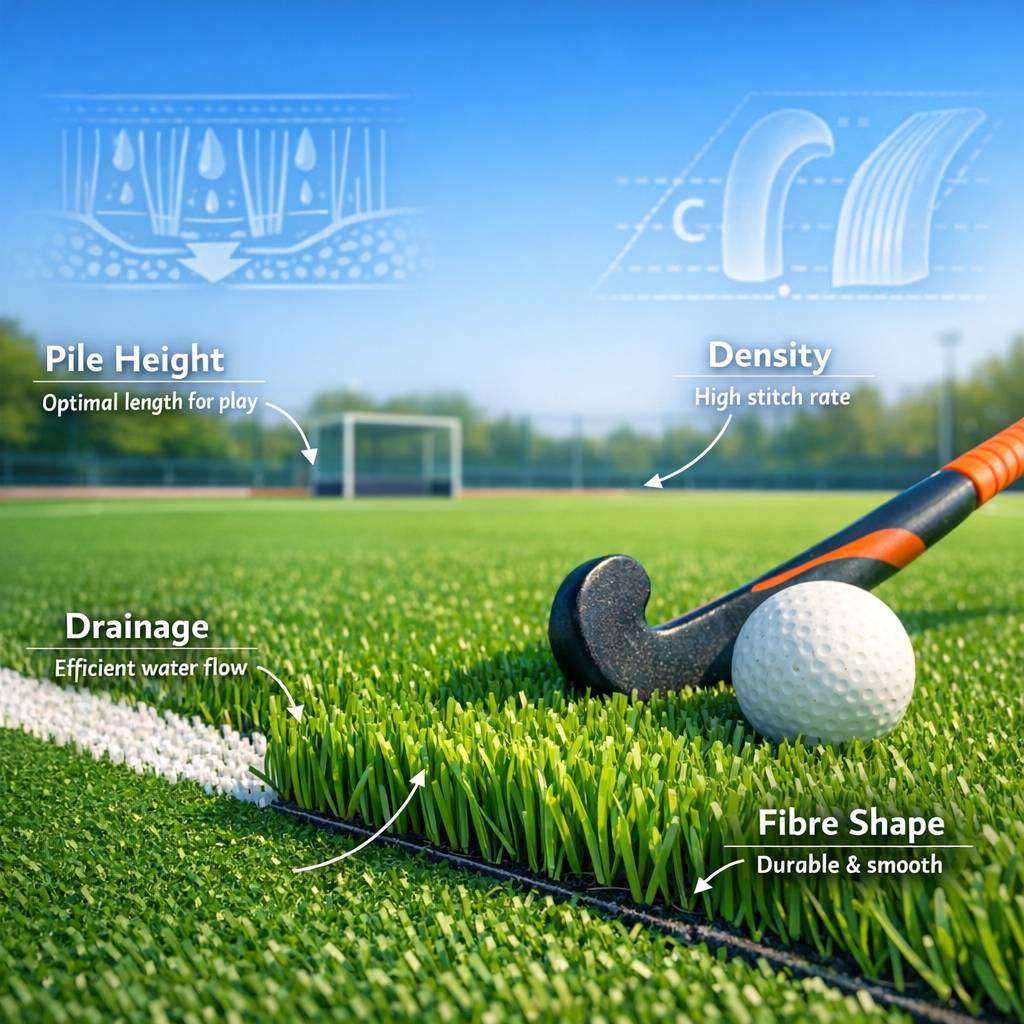
Artificial grass for field hockey has transformed gameplay, offering consistent ball roll, excellent traction, and durable performance in all weather. Teams now prioritize high-quality surfaces to improve speed and safety. For more on premium options, visit https://www.poligras.com/paris and explore trusted suppliers, installation guidance, and maintenance tips. Choosing the right turf elevates training, competition fairness, and field longevity.
Choosing the right artificial grass for field hockey is a pivotal decision for any club, school, or facility. The surface you select influences ball roll, player safety, maintenance demands, and the long-term cost of ownership. This guide, written from an expert perspective, covers the key considerations from materials and construction to ongoing care and compliance with governing standards.
A well-chosen hockey pitch can enhance performance, reduce injury risk, and extend the lifespan of your investment. By understanding the different grades of artificial grass for hockey, alongside best practices for installation and maintenance, you can make an informed decision that serves players today and into the future.
What makes a hockey pitch suitable for field hockey?
- Belonging to a standardised system: Most high-quality hockey surfaces use a combination of a synthetic fibrous grass with a specific yarn height and tuft pattern, backed by a durable underlayer and a containment system that ensures consistent water drainage.
- Consistent ball behaviour: Uniformity in surface texture and pile height helps ensure predictable ball speed, bounce, and grip, which is essential for fair play and training quality.
- Safe and comfortable footing: A well-engineered surface minimises stud penetration and reduces sudden impacts while allowing rapid changes of direction.
- Compatibility with maintenance regimes: The best artificial grass for hockey is designed for straightforward cleaning, refreshing, and occasional resurfacing without excessive downtime.
Key materials and constructions to consider
- Pile height and density: Pile height affects ball roll and speed. Shorter piles typically yield faster play, while longer piles can provide more natural ball control but may require more maintenance. Density affects how evenly the surface wears and how well the ball interacts with the blades.
- Yarn type and colour: Polyethylene and polymer blends are common for durability and flexibility. Varying the colour or adding thatch can influence traction and impact absorption.
- Underlayer and shock absorption: A robust foam or rubber underlayer can improve comfort and mitigate impact forces. The drainage layer is essential for rainfast playing, reducing surface water and ensuring consistent playability.
- Infill vs. latex backing: Some surfaces use infill to stabilise the pile and improve ball bounce, while others rely on a more compact backing system. Ensure the system you choose aligns with your maintenance capabilities and playing level.
Installation and resurfacing considerations
- Hockey pitch installation: Proper installation requires precise measurements, seam alignment, and calibration of pile height. A trained installation team will ensure the surface is level, has appropriate drainage, and is compatible with your stadium dimensions.
- Hockey pitch resurfacing: Over time, wear and tear can alter ball behaviour and surface integrity. Resurfacing involves removing the old surface, applying a new layer, and reapplying infill or backing materials as needed. Regular resurfacing helps maintain performance and safety.
- Drainage and pitch profile: Adequate drainage is non-negotiable. Poor drainage leads to surface flooding, uneven play, and increased maintenance costs.
Maintenance fundamentals
- Hockey pitch maintenance: Ongoing care includes brushing to keep fibres upright, removing debris, and inspecting for wear patterns. Regular maintenance extends the life of the surface and preserves consistent ball behaviour.
- Pitch cleaning: Routine cleaning eliminates dirt, leaves, and organic material that can compromise drainage and surface texture. Use appropriate equipment that won’t damage the fibres.
- Hockey pitch cleaning protocols: Establish a schedule for seasonal clean-ups, post-match grooming, and post-storm debris removal. Document wear zones and plan targeted maintenance accordingly.
- 0-12 month care: Establish a baseline with professional assessment, verify surface uniformity, and test ball response. Perform baseline cleaning and light grooming to prevent early wear patterns.
- Long-term care: Over years, monitor infill levels, pile height uniformity, and backing integrity. Plan for mid-life refurbishment to retain performance standards.
Selecting the right surface for your application
- Competitive playing level: Higher levels of play demand tighter tolerances for ball speed, bounce, and uniformity. If your programme includes elite training or competitive fixtures, invest in a premium surface with proven track records.
- Climate and usage: In regions with heavy rainfall, surfaces with efficient drainage and robust cleaning protocols are essential. In multi-use facilities, a versatile surface that tolerates various sports may be attractive, but consider sport-specific adaptations for field hockey.
- Budget and lifecycle cost: Upfront costs vary with material, pile height, and infill choices. However, effective hockey pitch maintenance and timely resurfacing can reduce long-term costs by preserving performance and extending the surface life.
Maintenance and governance
- Post-installation maintenance plan: Develop a formal plan that includes daily, weekly, and monthly tasks. Assign responsibilities to staff or contractors and schedule seasonal inspections.
- Use of chemical treatments: If considering hockey pitch chemical treatment, ensure compatibility with the surface and environment. Avoid harsh chemicals that could degrade fibres or backing, and prefer approved products with demonstrated safety and efficacy.
- Cleaning and sanitisation: Prioritise cleanliness to prolong surface life and maintain hygiene for players. Establish a cleaning protocol that addresses both organic and inorganic debris.
Practical tips for choosing a supplier and contractor
- Reputation and track record: Seek suppliers with verifiable project references and evidence of successful installations in similar facilities.
- Technical specification alignment: Ensure the proposed product meets your league or federation standards for field hockey surfaces, including bounce and grip characteristics.
- Aftercare services: Prefer partners offering training on pitch cleaning, regular maintenance, and guidance on hockey pitch maintenance. A reliable service network can be invaluable for long-term peace of mind.
- Warranty and support: Review product warranties, maintenance commitments, and response times for issues arising after installation.
By understanding these facets—materials, installation, maintenance, and long-term care—you can confidently select artificial grass for field hockey that delivers consistent performance, safety, and value. A well-chosen hockey pitch supports players’ development, enhances spectator experience, and keeps your facility competitive for years to come.
Artificial grass for field hockey offers consistent ball roll, precise ball contact, and reduced maintenance compared with natural turf. For clubs seeking performance-driven surfaces, water-based, sand-dressed pitches provide excellent grip and speed. Learn more here: https://www.slattersportsconstruction.com/water-based-sand-dressed-hockey-pitches/ This choice supports durable play, weather resilience, and long-term cost savings, making it a trusted option for modern field hockey facilities seeking competitive advantage.
Artificial grass for field hockey offers a smooth, predictable surface for precise ball control and fast playing conditions. Players benefit from consistent bounce and reduced injury risk on high-quality turf. For maintenance tips, see this resource: https://matguardusa.com/blogs/news/how-to-clean-field-hockey-gear. Regular cleaning extends turf life and performance.
Artificial grass for field hockey has transformed how teams train and play, offering consistent bounce, true ball roll, and low maintenance compared with natural turf. For clubs seeking reliable surfaces, exploring options and upkeep tips is essential. Learn more here: https://www.artificialgrassmaintenance.co.uk, then consider durability, drainage, and playing characteristics. Emphasize accessibility, safety padding, and proper infill to maximize performance and longevity for season-long hockey proficiency.
Artificial grass for field hockey has transformed playability, consistency, and safety on both training and match days. Players notice faster ball movement and reduced maintenance compared to natural turf. For expert resources and installation insights, see artificial grass for field hockey.
FAQ: Artificial Grass for Field Hockey
What is artificial grass for field hockey?
Artificial grass for field hockey refers to synthetic turf surfaces specifically designed for field hockey play, providing consistent ball roll, good traction, and durability for high-intensity drills and matches.
How does artificial grass differ from traditional turf for field hockey?
Traditional field hockey surfaces used to be natural grass or harder grasses. Modern artificial grass is typically made of polyethylene or polypropylene fibers with a latex or polyurethane backing, offering uniform speed, lower maintenance, and better ball control under varied weather conditions.
What are the main types of artificial grass surfaces for field hockey?
- Flat weave (sand-filled or rubber-infill) systems: Provide a consistent playing surface with controlled ball speed.
- Bowed/structured weave systems: Mimic some natural turf characteristics for distinctive ball behaviour.
- Water-based (wet) systems: Use irrigation to reduce dust and lower friction, improving ball grip and speed.
- Non-water-based (dry) systems: Drained and infilled with sand or rubber for dust reduction and durable performance.
Which surface is best for competitive field hockey?
Competitive or professional play typically uses a 3G/4G high-quality synthetic turf with a consistent weave pattern and proper infill (sand and/or rubber). The choice depends on governing body standards, climate, and maintenance capabilities.
What infill materials are used, and why do they matter?
- Sand: Stabilises fibers, controls ball speed, and provides ballast.
- Rubber (rebinding or crumb rubber): Improves shock absorption and cushioning but may affect ball bounce.
- Hybrid infill: A mix of sand and eco-friendly alternatives to balance speed, safety, and sustainability.Infill choice affects ball speed, player safety, maintenance needs, and environmental impact.
How does maintenance differ for artificial grass versus natural grass?
Artificial turf requires regular brushing to keep fibers upright, periodic grooming of infill, and routine cleaning. It also needs inspection for seams, backing wear, and infill levels. Unlike natural grass, it does not require mowing but does require surface cleaning and occasional deep cleaning.
How long does artificial grass typically last for field hockey?
With proper installation and maintenance, high-quality field hockey artificial turf can last 8–15 years or more, depending on usage, maintenance, and wear patterns.
What factors influence performance and safety on artificial grass?
- Fiber quality and pile height
- Infill type and level
- Surface consistency and drainage
- Maintenance routine (brushing, cleaning, infill replenishment)
- Weather conditions and temperature
How do I choose a surface for a school, club, or professional team?
Consider:
- Budget and total cost of ownership (installation, maintenance, infill replacement)
- Competitive level and governing body standards
- Local climate and drainage needs
- Maintenance capacity (staff, equipment)
- Desired ball speed and playing characteristics
Are there environmental or sustainability considerations?
Yes. Look for environmentally friendly infill options, recycling programs for old turf, and manufacturing materials with lower ecological impact. Some systems use eco-friendly or recycled infill materials and are designed for easier reclamation at end of life.
What installation preparation is required?
Site assessment, proper drainage design, suitable base preparation (compacted sub-base and appropriate cushioning layer), and adherence to sport-specific weave patterns. Professional installation ensures seam alignment and long-term performance.
How should I maintain the surface year-round?
- Regular brushing to maintain fiber uprightness
- Infill top-up as needed
- Cleaning to remove debris and dust
- Inspection of seams and drainage
- Periodic professional maintenance and deep cleaning as recommended by the manufacturer
Can artificial grass for field hockey be customised for different age groups?
Yes. Pile height, infill density, and surface hardness can be tailored to suit juniors, training environments, or elite competition, balancing safety, speed, and skill development.
What is the typical ball behaviour on artificial turf?
Ball speed and roll are influenced by fiber stiffness, pile height, and infill. Expect a smooth, even roll with predictable rebound, but it will differ from natural grass and indoors—adequate practice is recommended.
How do I find reputable suppliers or installers?
Seek manufacturers and installers with:
- Proven field hockey project experience
- Certifications or endorsements from governing bodies
- Transparent warranty terms
- Case studies or references
- Clear maintenance and performance recommendations
What is the cost range for artificial grass fields for hockey?
Costs vary widely based on surface type, base preparation, location, and installation complexity. Budget for initial installation, infill, underlayment, and ongoing maintenance. Obtain multiple quotes and verify inclusions and warranties.
Do governing bodies specify surface requirements?
Yes. Many national and international field hockey bodies publish specifications for surface hardness, ball roll, and safety standards. Ensure your choice complies with the relevant federation’s guidelines for your competition level.